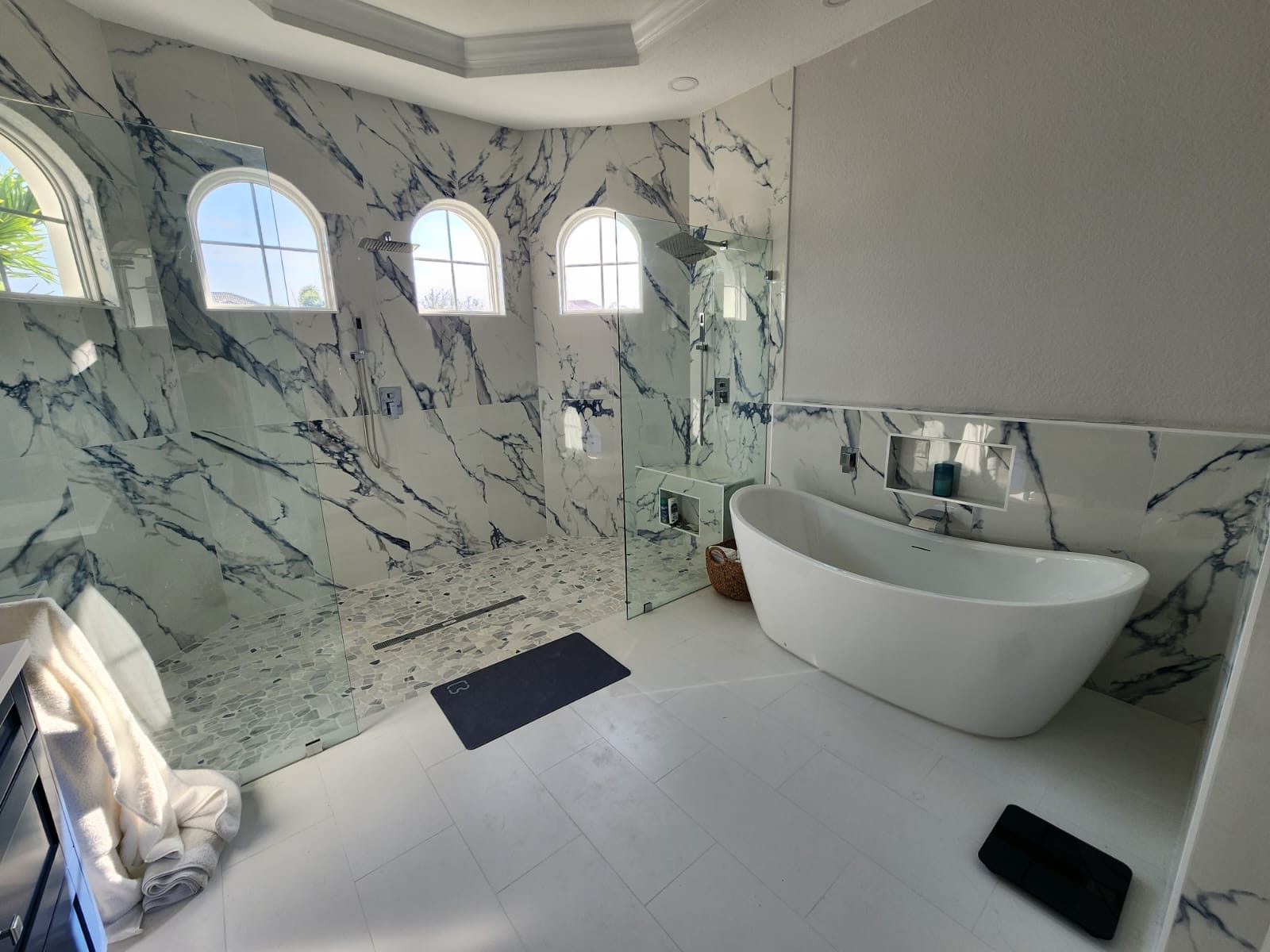
Porcelain is the practical choice for a Florida bathroom floor. It needs no sealing and does not etch, so it holds up to water, cleaners and daily use. Natural stone can look beautiful, but it asks for more care. Urban Remodeling uses porcelain over natural stone on bathroom floors and shower walls.
This guide compares the two options, then covers slip, grout and what to ask before work starts. If you are planning new floors in other rooms too, see our flooring installation page.
Which tile suits a Florida bathroom floor?
Porcelain suits most Florida bathrooms. Florida air is humid, bathrooms stay damp, and floors take splashes, steam and soap every day. A tile that shrugs off moisture and does not need regular upkeep is a strong fit.
Porcelain over natural stone is how we approach bathroom floors and shower walls: no sealing and no etching. Natural stone is still a choice some homeowners love for its look. The sections below show where the two differ so you can decide with the facts in front of you.
Porcelain or natural stone: what differs?
The biggest difference is upkeep. Porcelain is a manufactured tile that you can clean and then leave alone. Natural stone is cut from the earth, and each piece has its own pattern and its own needs.
Here is a side-by-side look at the factors that matter most in a bathroom.
Sealing
Porcelain needs no sealing. Natural stone usually needs a sealer, and that sealer has to be kept up. Skip it, and stone can soak up water and stain.
Etching
Porcelain does not etch. Many natural stones can etch when they meet acidic cleaners or products. Bathrooms are full of those, from soaps to scrubs to shower cleaners, so this is a real concern on a floor.
Look
Natural stone has a one-of-a-kind look that is hard to copy. Porcelain comes in a wide range of styles today, including tile that looks like stone, wood or concrete. Ask to see samples side by side in the light of your own bathroom.
Day-to-day care
With porcelain, you wipe and mop. With natural stone, you also have to watch which cleaners you use and plan to reseal. If you like low-maintenance living, that difference adds up.
Choose porcelain if you want a floor that needs no sealing, will not etch, and can be cleaned without extra steps. Choose natural stone if you love the look and are willing to take on the sealing and careful cleaning it needs.
Why does sealing matter?
Sealing matters because stone is porous, and a bathroom floor sees water all the time. Sealer helps keep water and stains from getting in, but it wears down and has to be renewed.
That is the hidden task behind a stone floor. It is not a one-time step at installation. If a sealer is missed or a cleaner strips it, stone can darken or stain. Porcelain avoids that chore, which is one reason we use it on floors and shower walls. For a full bath project, our bathroom remodeling page shows how the floor fits into the rest of the work.
What about slip and cleaning?
For slip, ask about the finish of the tile, not just the color. A glossy, polished surface can feel slick when wet. A matte or textured finish usually gives better footing in a bathroom.
Tile size and grout lines also matter. Smaller tiles mean more grout lines, which can add grip underfoot but also give you more grout to clean. Larger tiles mean fewer lines and an easier wipe-down. Neither is wrong, so pick the one that fits how you use the room. Light-colored grout shows dirt faster, and darker grout hides it. Ask your installer what grout they recommend for your tile.
For cleaning, keep it simple. Sweep or vacuum grit, mop with a mild cleaner, and wipe up puddles. A bath mat by the shower helps keep water off the floor.
What goes in the written scope?
The written scope should name the tile, the layout, the prep work under it and every step that affects the floor. At Urban Remodeling, you get one written scope and price before work starts, so these details are settled early.
When you review any floor scope, look for these items:
- The exact tile. Brand, size, color and finish, so there is no confusion later.
- Underlayment. What goes under the tile, and what the installer does to prepare the surface.
- Layout. Which direction the tile runs, and where cuts will fall.
- Grout. The type and color, and the size of the grout lines.
- Transitions. How the tile meets the hallway or bedroom floor.
- Removal. Whether the old floor is taken out, and who hauls it away.
- Permits and inspections. Who handles them. Permits are pulled under the contractor's own license and inspections are handled for you.
On underlayment in particular, ask what product will be used, why it was chosen, and how the surface will be checked before tile goes down. A good installer can explain this in plain words. If the answer is vague, ask again before you sign anything.
Who do you call for bathroom floor tile near you?
Urban Remodeling serves Vero Beach, Sebastian, Fort Pierce, Port St. Lucie, Stuart and Melbourne, with an office at 1125 US Hwy 1 in Vero Beach. We take on bathroom, kitchen, whole-home, flooring and outdoor kitchen and patio projects.
If you live in the Sebastian area, our Sebastian service area page has more about how we work there. A bathroom floor is a good time to think about the whole room, since tile, shower walls and fixtures often tie together.
Ready to talk through your bathroom floor? Call Urban Remodeling at (772) 404-8397 to set up a free estimate.
Thinking about this project?
Request a free estimate. We’ll walk the space with you and put a written price in front of you.
Call (772) 404-8397 Request a Free Estimate