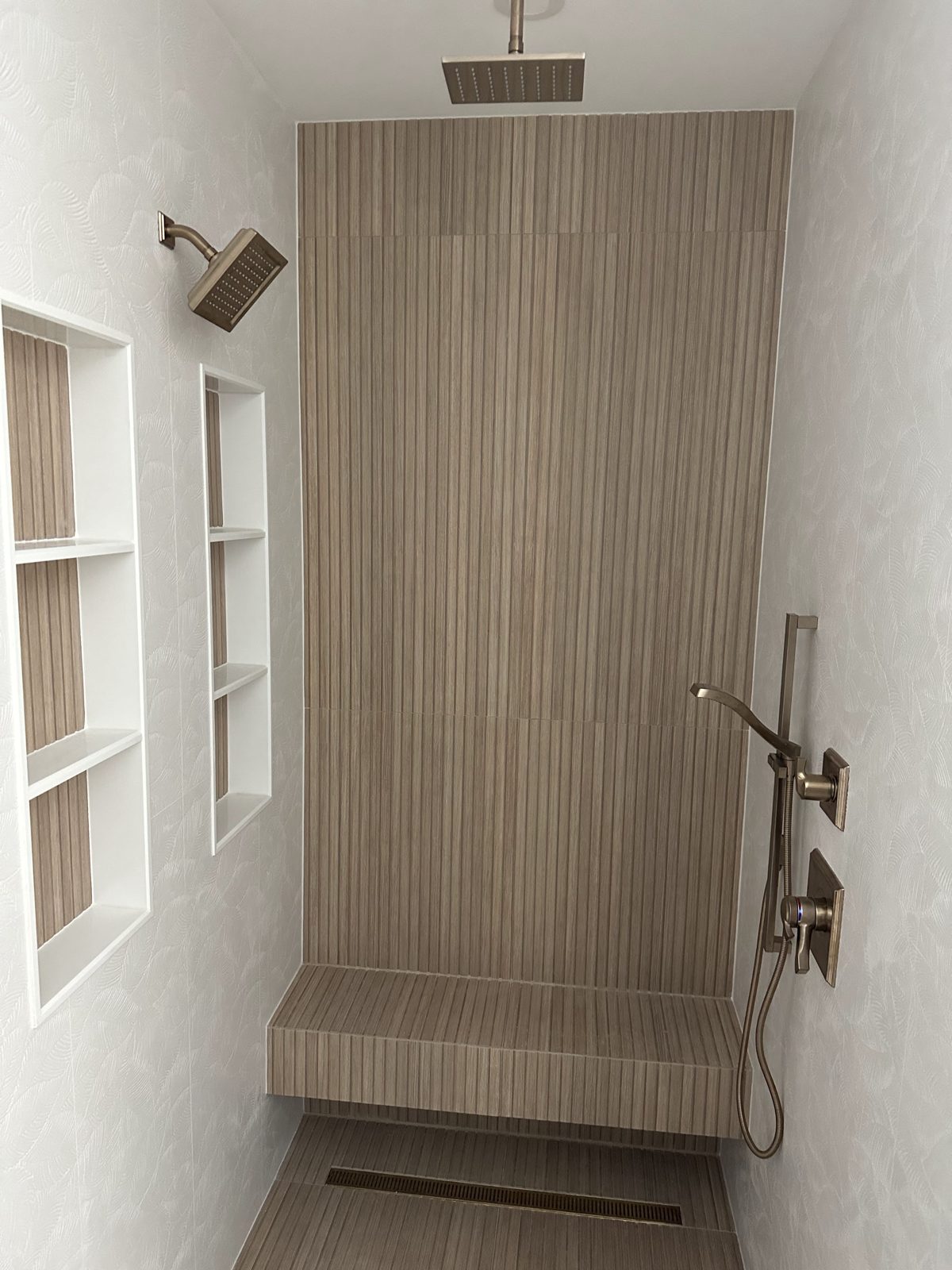
A tile shower can be a rewarding project, and some handy homeowners do take it on. The hard part is not the tile. The hard part is the hidden work behind it: the waterproofing, the slope of the floor, and the curb and drain connections. Those details decide whether the shower stays dry for years. This guide explains where DIY tile showers often go wrong, what you can safely do yourself, and when a professional is worth the call.
Why the Tile Is the Easy Part
Most people picture the tile first. Choosing the pattern, the color, and the grout is fun. Setting tile on a flat wall is also something many homeowners can learn with practice. But tile is only the top layer. Behind it sits a system that has to block water from reaching the wall framing and the floor below. If that system fails, the damage often stays hidden until it is serious.
Grout lines and tile edges are not waterproof. They let small amounts of water through. That is normal. The waterproof layer behind the tile is what keeps the water from going further. Think of the tile as a good raincoat, and the waterproofing as the lining that keeps you dry underneath.
Where DIY Showers Often Fail
Most leaks come from a few common mistakes. These are the areas where experienced crews focus the most attention:
- Waterproofing. A membrane that is too thin, skipped at the corners, or not sealed at the seams lets water pass behind the tile.
- The shower pan slope. The floor needs a slight slope toward the drain. Without it, water sits, soaks into the grout, and reaches the subfloor.
- The curb. The raised edge at the entry must be waterproofed over the top and down the outside. A curb that stops at the tile line is a common leak path.
- The drain connection. The liner has to seal to the drain flange with no gap.
- Niches and valve openings. Every recess and pipe that passes through the wall needs careful sealing.
Each of these steps is simple on its own. The challenge is getting all of them right, in the right order, and checking them before the tile covers them up.
The Order of Work Matters
A shower goes together in layers. The backer board goes up first. The waterproofing comes next, followed by corner treatments, seals, and cure time. Then the pan is set, the tile goes up, and the grout is applied last. Skipping ahead or rushing a layer can trap moisture. A common mistake is to tile before the membrane has fully cured, or to set the tile with mortar that is not made for wet areas.
Products matter too. Each waterproofing system has its own instructions for surface prep, temperature, drying time, and what can go over it. Read those instructions before you buy anything. If the product says to do something a certain way, follow that step exactly. Do not guess.
What You Can Safely Do Yourself
Some parts of a tile shower are good projects for a careful homeowner. These tasks are often within reach:
- Demolition of an old shower surround, with care around the plumbing and the wall
- Cleaning and prepping the surfaces before the new layers go on
- Setting simple, flat wall tile on a prepared surface
- Grouting, sealing, and cleaning the finished tile
- Selecting fixtures, glass, and accessories
Even these tasks need patience. Take your time, follow the product directions, and keep the area clean. Small mistakes in the prep stage can cause problems later.
Where a Pro Is Worth the Call
Some steps are best left to a professional. Consider calling a trained crew for the following:
- The waterproofing system, including corners, seams, and penetrations
- The shower pan, including the slope and the drain connection
- Any work that moves plumbing or changes the layout
- Framing, blocking, or repairs to a wall that has been damaged
- Any step that requires a permit or an inspection
A pro will also bring experience with the tricky details. They know where water likes to travel, and they know how to stop it. That experience is hard to learn from a single project.
Permits and Inspections
Some shower projects need a permit, especially when plumbing or structure is involved. Check with your local building department before you start. Ask whether an inspection is needed before the tile goes on. This is a good time to check the waterproofing and the pan, since those layers are hidden once the tile is set.
At Urban Remodeling, permits are pulled for you and inspections are handled for you as part of the project. We give you one written scope and price before work starts, so you know what is included.
Ask Before You Start
Whether you do the work yourself or hire a pro, ask a few clear questions first:
- What waterproofing system will be used, and where does it go?
- How will the pan be sloped, and how is it sealed to the drain?
- How will the curb and the niche be protected?
- Will the work be checked before the tile covers it?
- Who handles the permit and the inspection?
Good answers are specific. Vague answers are a warning sign.
How to Decide
Be honest about your skills, your time, and your tolerance for risk. If you enjoy the work and have done tile before, you may be able to handle the surface tile and some of the prep. If the shower involves a new pan, a new curb, or any plumbing change, a pro is usually the safer choice. A hybrid plan can also work. You might do the demolition and the finish work while a crew handles the waterproofing and the pan.
Serving the Treasure Coast
Urban Remodeling serves Vero Beach, Sebastian, Fort Pierce, Port St. Lucie, Stuart, and Melbourne. We handle bathroom remodeling and the rest of the home, including kitchens, whole-home projects, flooring, and outdoor kitchens and patios. You can read more about our bathroom remodeling services to see how we approach a shower project.
If you are also planning a larger bathroom update, our guide to bathroom remodeling in Vero Beach covers the broader steps from planning to finish.
Next Steps
A tile shower is a big project, and the hidden layers matter most. Decide what you can do safely, and call a pro for the waterproofing, the pan, and any plumbing work. Ask good questions before you start. When you are ready, Urban Remodeling offers free estimates, and we will walk through your shower plans with you. Call (772) 404-8397 to request a free estimate for your bathroom project.
Thinking about this project?
Request a free estimate for your shower project. We’ll walk the space with you and put a written price in front of you.
Call (772) 404-8397 Request a Free Estimate