Floors that fail early usually had the wrong material for the room, no plan for slab moisture or poorly planned edges. Fix those three things before you buy a second floor. Urban Remodeling sees this often in Vero Beach and along the Treasure Coast, and most flooring calls start the same way.
Why do floors fail on a Florida slab?
Most Florida homes sit on a concrete slab, and slabs hold and release moisture. Florida humidity is harder on flooring than most product labels admit, so a floor that works in a dry state may struggle here.
Most flooring calls we get start with a homeowner who replaced flooring once already and it did not hold up. The signs are familiar: edges lifting near a slider or a laminate seam bubbling within a couple of years. We start with what performs on a Treasure Coast slab, not what looks good in a photo. See our flooring services for what we install.
Was the material wrong for the room?
Sometimes the floor itself was the mistake. Some materials handle water and humidity better than others, and a good floor in a bedroom may be a poor choice for a kitchen or a room that opens to the patio.
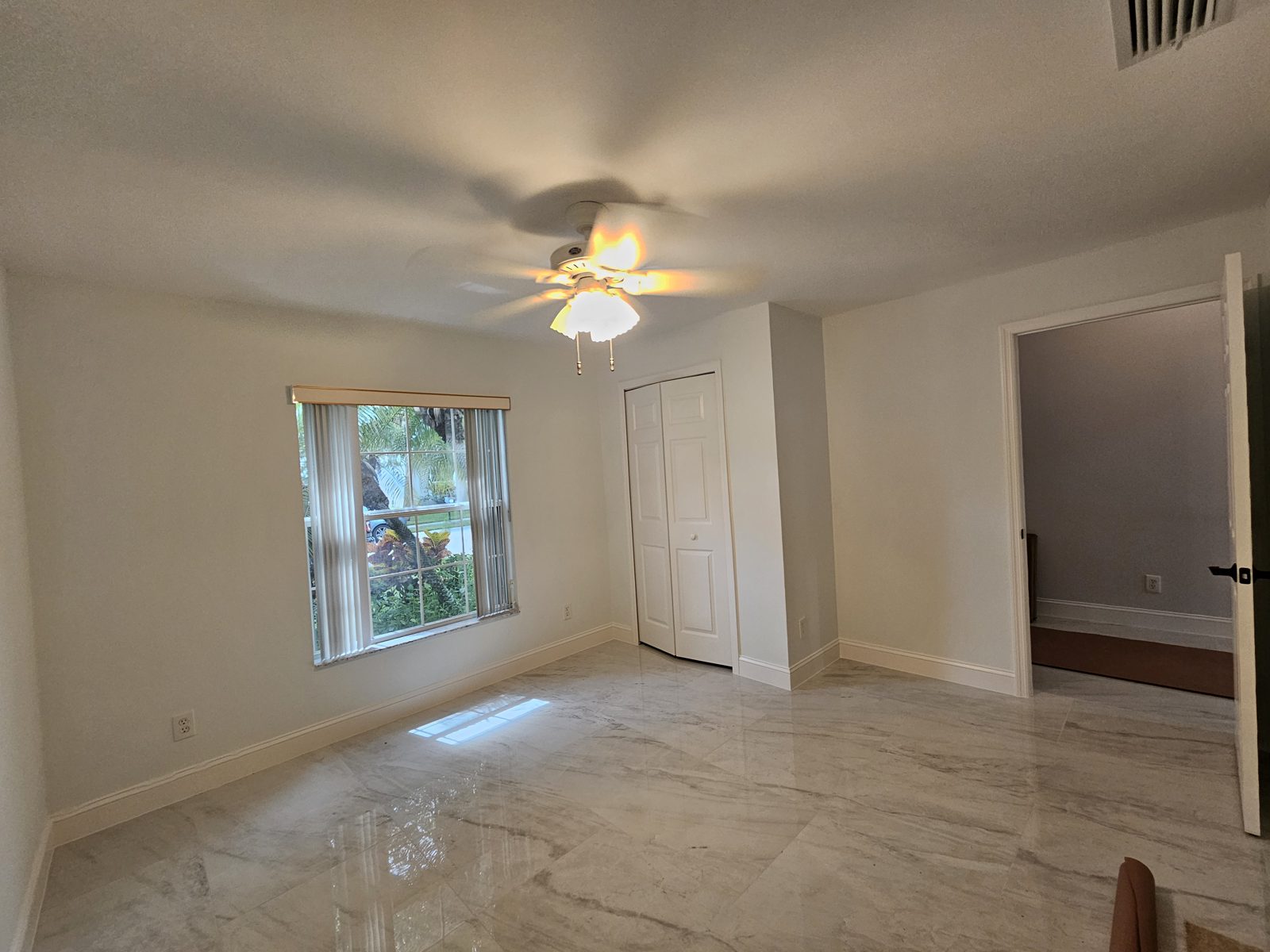
Think about how the room is used. Do wet feet come in from the pool? Does the sun hit one side all day? Is the room open to the outdoors? Porcelain tile, for example, is a common pick for living areas in Florida because it handles humidity well. A floor that is rated for a dry room does not belong in a damp one, no matter how good the sample looked.
Was moisture ignored?
Often, yes. Moisture coming up through the slab is a leading cause of lifted edges and bubbled seams, and it is easy to overlook because it happens out of sight.
Ask whether anyone checked the slab before the old floor went down. If the answer is no, that is a clue. Look for signs like a musty smell, dark spots under old boards or a floor that feels cool and damp in humid weather. A floor laid over a wet slab can look fine for a while, then start to fail.
Were the transitions and edges planned?
Edges are where floors give up first. A floor needs room to move, and the places where it meets a door, a slider or another floor need to be planned, not improvised.
Edges lifting near a slider is a classic case. Sliding doors let in sun and humidity, and a floor with no room for movement will push up. We cover it in detail in our post on why flooring edges lift near sliding doors. If your edges have already started to rise, that read will help.
What should you check before replacing it again?
Check the cause before you pay for a new floor. A second floor laid over the same problem will fail the same way.
- Find out what material you have and where it is failing.
- Look at the edges near doors, sliders and seams.
- Ask whether the slab was checked for moisture.
- Check for leaks near plumbing, the air handler and exterior doors.
- Ask what the plan is for transitions between rooms.
- Get the scope in writing before work starts.
If the old installer is available, ask what was done under the floor. If not, a walkthrough with a new contractor can answer most of these questions in one visit.
Who should look at the floor first?
Someone who will look at the slab, the room and the edges together. A floor is a system, so one quick glance at the surface is rarely enough.
A good visit covers what is under the floor, how the room is used and where the old floor is failing. It should end with a plain answer: what went wrong, what needs to change and what the new plan is. If a contractor skips straight to a price, ask them to explain the cause first. Without the cause, you may be paying to repeat the same mistake.
Photos help. Take pictures of the lifted edges, the bubbled seams and any stains before the visit, so the whole picture is clear.
What changes the second time?
The second time, the plan starts with the problem instead of the product. The material is picked for the room, the slab is looked at and the edges are planned before anything is laid.
At Urban Remodeling, you get one written scope and price before work starts. That means the material, the prep and the transitions are all on paper, so there are no surprises midway through. We serve Vero Beach, Sebastian, Fort Pierce, Port St. Lucie, Stuart and Melbourne.
If your floor failed and you want to get it right, call Urban Remodeling at (772) 404-8397 for a free estimate.
Thinking about this project?
Get a free flooring estimate. We’ll walk the space with you and put a written price in front of you.
Call (772) 404-8397 Request a Free Estimate