
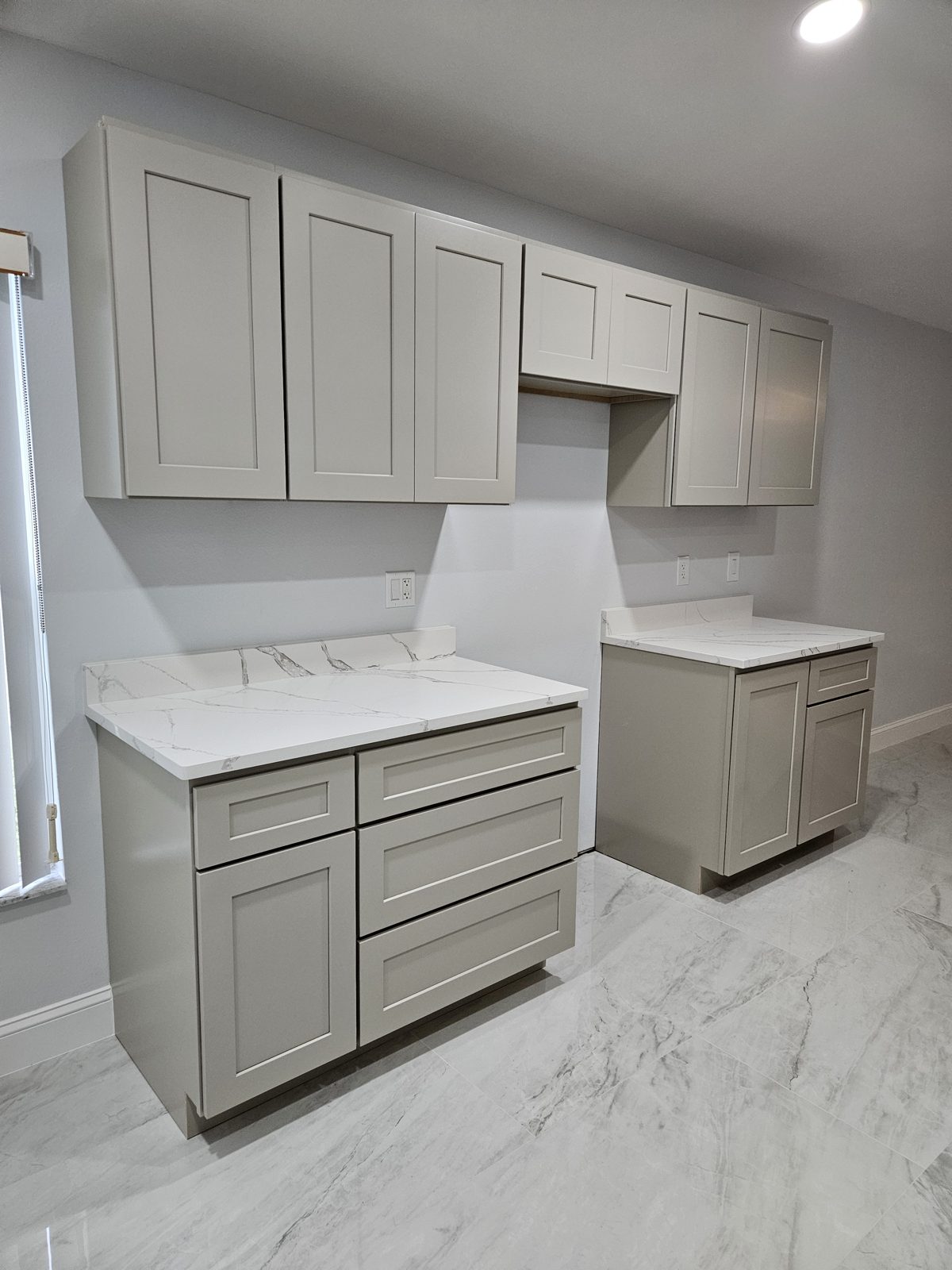
The best kitchen countertop for a Florida home depends on how you cook, how you clean, and how much upkeep you want. Quartz is engineered and low maintenance. Granite is natural stone with unique patterns and needs more care. Compare both against your daily routine before you choose.
Start With How You Use the Kitchen
Think about your typical day. Do you cook big meals or mostly reheat? Do you have young children, pets, or guests who sit at the island? A busy kitchen needs surfaces that handle spills, hot pans, and heavy use. A quieter kitchen may allow more flexibility. Your answers will narrow the choices quickly and help you focus on what matters most.
Quartz: Low Maintenance and Consistent
Quartz countertops are made from crushed stone held together with resins. The result is a surface with a consistent look from slab to slab. Quartz is non-porous, so it does not usually need sealing. Routine cleaning with mild soap and water keeps it looking good. Many homeowners like quartz because it is predictable and easy to care for. Patterns range from simple solids to designs that mimic marble.
Granite: Natural Stone With Character
Granite is quarried natural stone. Every slab is different, with its own colors, veining, and movement. That natural character appeals to many homeowners. Granite is generally strong and handles heat well. It is also more porous than quartz, so it often needs periodic sealing. Ask about the sealing schedule for the specific slab you choose. A good stone shop can explain the care steps clearly.
Heat Resistance and Hot Pans
Heat is a common concern in busy kitchens. Granite holds up well to hot cookware in most cases. Quartz is also durable, but resins can be damaged by very high heat. Use trivets and hot pads no matter which material you pick. Setting a hot pan straight from the stove onto any surface invites trouble. A simple habit protects your investment for years.
Stains and Everyday Spills
Wine, oil, coffee, and citrus can stain countertops if they sit too long. Quartz resists most stains because it is non-porous. Granite can stain if it is not sealed or if spills dry on the surface. Wipe up spills quickly, especially acidic ones. Keep a soft cloth near the sink and use cleaners that match the material. Quick action makes a big difference in how the surface looks over time.
Florida Light, Humidity, and Coastal Air
Florida homes face strong sun, heavy humidity, and salt air near the coast. Sunlight can affect some colors and finishes over time, especially near a window. Humidity can make sealing more important for natural stone. Coastal homes may need extra attention to cleaning. Look at samples in the actual light of your kitchen. A color that looks perfect in a showroom may shift at home.
Choosing the Right Edge
The edge shape changes how a countertop feels and how it cleans. Straight, eased, and bullnose edges are common choices. A thicker edge can look more substantial, while a thinner edge can feel lighter. Consider how you will use the edge at the island and at the sink. Some edges are easier to wipe clean than others. Ask to see edge samples before you decide.
Seams, Sinks, and Cutouts
Every countertop has seams where slabs meet, especially in larger kitchens. Plan where seams fall so they land in less visible spots. Sink type and faucet placement also matter. Undermount sinks give a clean look, while drop-in sinks may suit other designs. Cutouts for cooktops and outlets need careful measurement. Confirm these details early so the fabrication matches your plan.
Matching Countertops With Your Cabinets
Your countertops should work with your cabinets, floors, and backsplash. Bright whites, warm neutrals, and deep tones each shift the room in a different way. Bring samples of your cabinet finish and flooring when you shop. Look at the materials together in natural light. A balanced palette makes the whole kitchen feel more cohesive.
Questions to Ask Before You Buy
- How often does this material need sealing, if at all?
- How does it handle heat, stains, and acidic spills?
- Can I see the exact slab I am buying, or a close match?
- Where will the seams fall in my layout?
- What edge options work best with my cabinets and island?
Planning the Full Project
Countertops are one part of a larger kitchen plan. Cabinets, lighting, flooring, and appliances all affect the final look. Plan the order of work so countertops are measured after cabinets are set. Ask for one written scope and price before work starts, so you know what is included. A clear plan helps everything fit together on schedule.
Serving Vero Beach and the Treasure Coast
Urban Remodeling is based at 1125 US Hwy 1 in Vero Beach, FL. We serve Vero Beach, Sebastian, Fort Pierce, Port St. Lucie, Stuart, and Melbourne. We handle kitchen remodeling, bathroom remodeling, whole-home remodeling, flooring installation, and outdoor kitchens and patios. Permits are pulled and inspections are handled for you, so you can focus on the design.
Next Steps
If you are planning a kitchen update, start with our kitchen remodeling page. For a broader look at choosing the right approach, read our guide on cabinet refacing versus replacement in Vero Beach. Both pages can help you plan your next step.
Ready to talk about countertops for your home? Call Urban Remodeling at (772) 404-8397. We offer free estimates, and we will walk through your options with you so you can choose a material that fits your kitchen and your life.
Thinking about this project?
Request a free estimate from Urban Remodeling. We’ll walk the space with you and put a written price in front of you.
Call (772) 404-8397 Request a Free Estimate