A good patio material in Florida has to handle strong sun, heavy rain, and days when the ground stays wet. Pavers, poured concrete, tile, and covers each handle heat, slip, drainage, and upkeep in different ways. Choose with your daily use and your yard in mind, and the patio will serve your household well for years.
Start With How You Will Use the Patio
A patio for dinner parties needs a different surface than a patio for kids and pets. Think about foot traffic, grills, furniture, and whether you plan to add an outdoor kitchen later. Write down your top three uses. Those answers guide the material choice more than looks alone.
Pavers: Flexible and Repairable
Pavers are small units set on a base of sand and gravel. They come in many shapes and colors. If a paver cracks or sinks, it can be lifted, the base can be corrected, and the paver can be set back in place. That makes pavers easier to repair than a single slab. The joints need sand or a polymer filler, and weeds can grow in them over time. Ask how the joints will be handled before you choose.
Concrete: Strong and Simple
Poured concrete is a durable base for many patios. It can be finished with texture for better footing, or stained for color. Concrete can crack as it cures and as the ground shifts. Control joints guide where those cracks form, so they fall in straight lines. Ask how the slab is sloped and whether the joints are planned around your layout.
Tile: Style With Care
Outdoor tile offers strong color and pattern. Choose tile made for outdoor use, with a textured surface for better footing when wet. Smooth glazed tile can be slippery after rain. Grout lines need regular upkeep so water does not get under the tile. Ask the crew how the tile will be set, since a poor base can cause cracks even with good tile.
Covers and Screened Areas
A roof or screen over the patio changes how you use the space. Shade cuts the heat on the surface, and a covered area stays usable during afternoon storms. Covers also protect furniture and grills from weather. Ask how the cover drains rainwater and where that water will go. A cover that sheds water onto the patio can create a new problem.
Managing Heat on the Surface
Dark materials can get very hot in the Florida sun. Light colors and textured finishes usually stay cooler. If you can, ask for samples and look at them in full sun, not only in a showroom. Shade from a cover or from nearby trees also helps. Think about where people will walk barefoot, such as near a pool, a door, or a play area.
Slip Resistance and Wet Footing
Rain and sprinklers make smooth surfaces slippery. Look for textured or slip-resistant finishes, especially near steps, grills, and the back door. Edges matter too. A sharp, smooth edge can be harder to see when wet. Ask for a sample to test with a wet shoe before you commit.
Drainage Matters More Than You Think
Water must leave the patio quickly. The surface should slope away from the home, usually with a gentle fall. Standing water leads to algae, slippery spots, and water that moves toward the foundation. Good drainage is planned at the start of the project, not added later. Ask how the slope and drainage paths are set in your plan before the base is built.
Upkeep Over the Years
Every material needs some care. Pavers need joint sand refreshed and an occasional reset. Concrete may need sealing and crack checks. Tile needs grout cleaned and checked. Covers need inspection for loose panels or fasteners after storms. A simple yearly check helps you catch small issues before they become large repairs.
Compare the Options Side by Side
Each material has clear strengths and tradeoffs. Use this quick guide as a starting point:
- Pavers: easy to lift and reset, but joints need regular care
- Concrete: a solid, durable base, with control joints and sealing to plan for
- Tile: many styles, best when outdoor-rated with a textured finish
- Covers: shade and rain protection, but drainage must be planned carefully
Planning an Outdoor Kitchen Patio
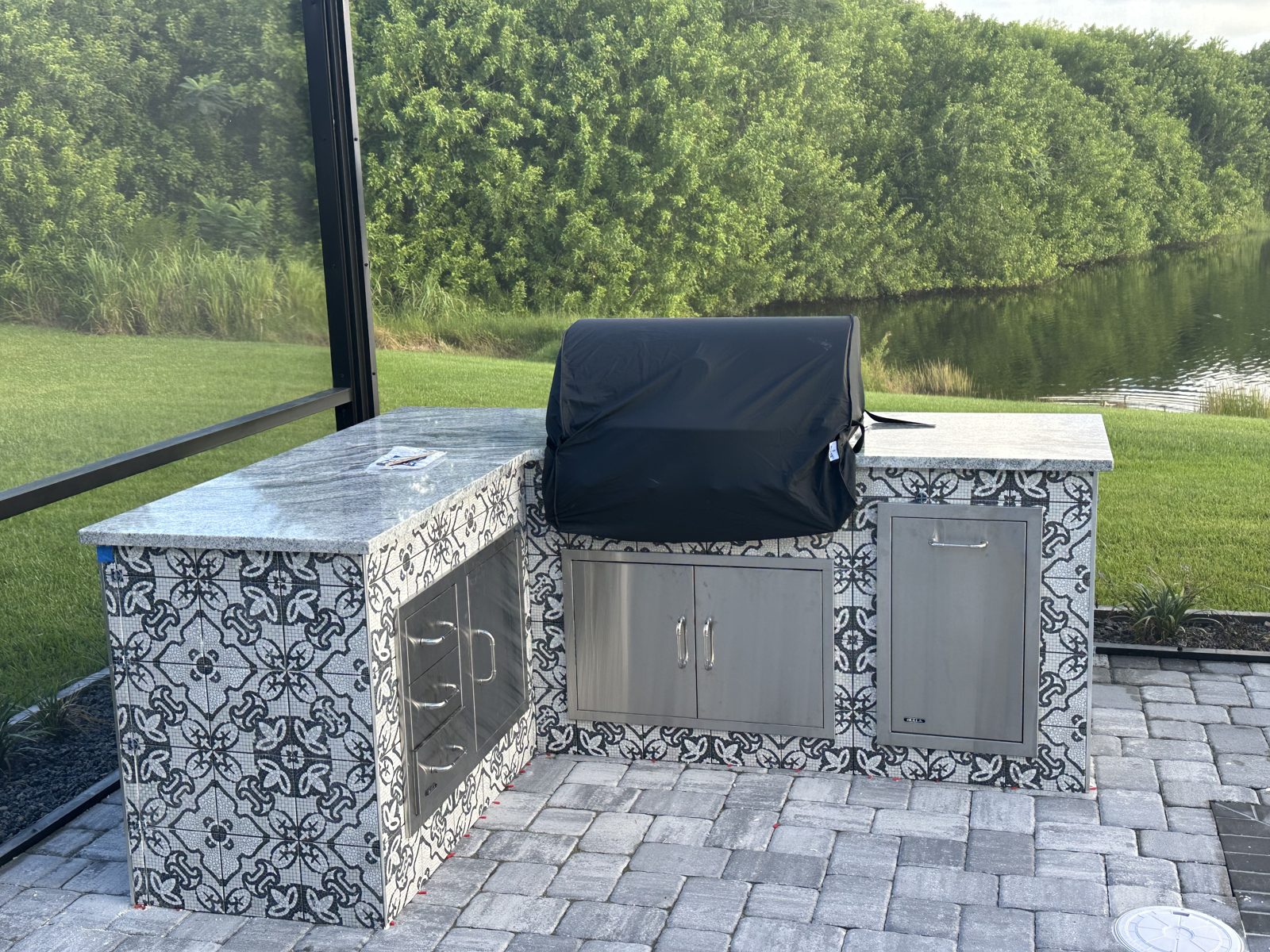
If your patio will include an outdoor kitchen, plan the material around the cooking area too. Grill spots need surfaces that handle heat well. Counters and seating need a stable base that will not shift. Our team handles outdoor kitchens and patios, and we can walk through the options with you. Learn more about our outdoor kitchen and patio services.
Questions to Ask Before You Choose
A short list of questions keeps the decision clear. Ask these before you pick a material:
- How will this surface handle heat and rain?
- What is the slope, and where will the water go?
- What joints, edges, and transitions are included?
- How will the surface be repaired if it cracks or shifts?
- Will I get one written scope and price before work starts?
Working in Stuart and Nearby Towns
Homeowners in Stuart, Port St. Lucie, Fort Pierce, Vero Beach, Sebastian, and Melbourne deal with the same sun and rain. Local soil, yard slope, and drainage can change the right choice on each lot. That is why a site visit matters. You can read more about our work in Stuart, and we will look at your yard before recommending a material.
Urban Remodeling offers free estimates. Our office is at 1125 US Hwy 1, Vero Beach, FL. Call (772) 404-8397 to talk about your patio plans and request a free estimate. We will review your yard, how you plan to use it, and the materials you like, then give you one written scope and price before any work begins.
Thinking about this project?
Request a free estimate from Urban Remodeling. We’ll walk the space with you and put a written price in front of you.
Call (772) 404-8397 Request a Free Estimate