
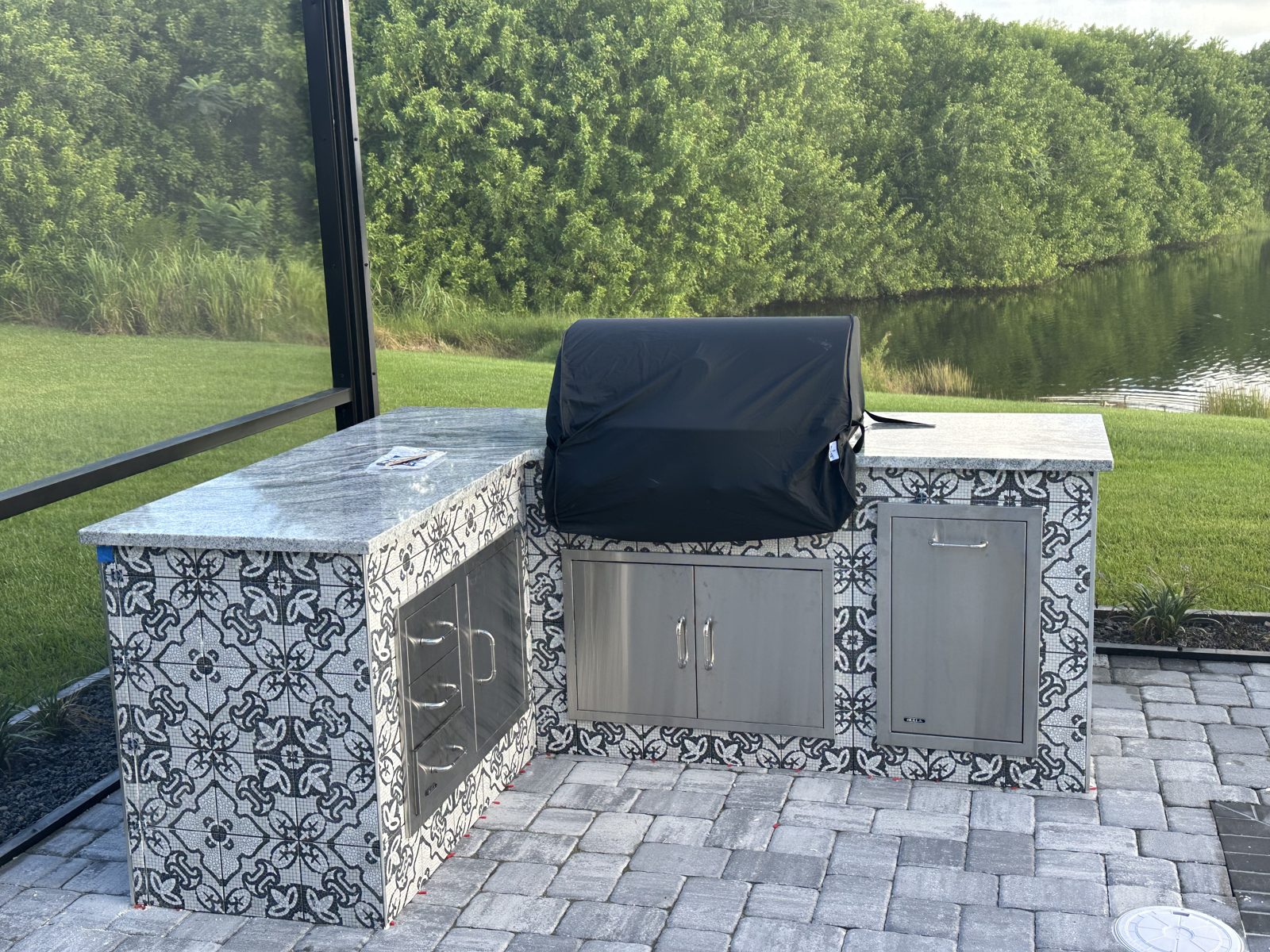
Waterfront homes get humidity, wind and salt together, so finishes and hardware are chosen for that exposure rather than for looks alone. Urban Remodeling plans for humidity, wind and salt exposure in flooring, outdoor structures and exterior-facing finishes when it works on river and canal homes in Vero Beach, Stuart and nearby cities.
What makes a waterfront home harder on finishes?
Three things hit at once. Damp air gets into everything, wind drives rain and salt against the house, and salt stays on surfaces that do not get rinsed by rain. Any one of them wears a finish. Together they wear it faster.
A home on a river or canal does not feel the ocean the way a beachfront home does, but the same forces are at work. Moist air sits over the water. Wind carries salt and spray inland. Surfaces that face the water take the most exposure, and that includes doors, railings, outdoor fixtures and the outside of the house.
That is why the choice of finish matters more here than it does a few streets back from the water. A finish that looks good in a showroom may not hold up on a dock-side patio. The question to ask about any material is how it behaves when it stays damp, takes wind-driven rain and sees salt on the surface.
How does salt exposure change outdoor choices?
Salt exposure pushes you toward materials that do not corrode and surfaces that are easy to rinse. Outdoor structures, such as patios, covered areas and outdoor kitchens, are the first places it shows.
Start with the structure itself. Wood that stays damp can swell, stain or rot, and metal that is not made for salt can pit or rust. Look at what the frame, posts, brackets and fasteners are made of, not just the surface you see. For ideas on materials, read our post on patio materials for Florida sun and rain.
Outdoor kitchens add appliances, utilities and cabinets to the list. Each of those parts has to handle salt air on its own. Ask what is rated for outdoor and coastal use, and ask how the parts will be kept clean. Our outdoor kitchen and patio work starts with a plan for the site, including how close it sits to the water.
- Frames and posts: look at the material and the finish, not only the paint.
- Counters and surfaces: pick something that tolerates damp and rinses clean.
- Cabinets: choose outdoor-rated boxes and doors, not indoor cabinets moved outside.
- Drainage: make sure water leaves the surface instead of pooling.
Which indoor finishes feel humidity first?
Flooring, cabinet bases and bathroom surfaces feel humidity first, because they sit closest to moisture. Doors and windows that open to the water side bring salt and damp air into the house as well.
Flooring is the most common concern. Boards and planks can swell or lift when the air stays damp, and edges near sliding doors take the most punishment. Choose a floor that tolerates moisture and talk about how it will be installed near doors and wet areas. If you are weighing options, see our flooring installation page.
In a kitchen or bath, look at the lower parts first. Cabinet bases, toe kicks and vanities take splashes and damp air at floor level. Ask what the boxes are made of and how the edges are sealed. Ventilation matters too, since a fan that moves damp air out of the room helps every finish in it.
Paint and trim also work harder near the water. Pick finishes made for humid rooms, and expect to touch them up over time. A little upkeep is normal on a waterfront house, and it is easier to plan for it than to be surprised by it.
What hardware belongs outside?
Choose hardware made for outdoor and coastal use, such as corrosion-resistant fasteners, hinges, latches and fixtures. Ordinary indoor hardware can rust or pit when salt sits on it.
Hardware is where coastal homes often wear first. Small parts like hinges, handles, screws and light fixtures are exposed, and they are the pieces that show rust. Our Vero Beach work includes the reminder that coastal homes wear hardware faster, so it is worth choosing it with care.
Ask what the hardware is made of and where it will be used. A part that does well inside a dry room may not hold up on a gate, a railing or a door that faces the water. When two parts touch, such as a bracket and a screw, they should be a good match so one does not eat away at the other.
Plan to rinse outdoor hardware and fixtures now and then. Fresh water removes salt before it builds up. It is a simple habit, and it helps every outdoor finish last longer.
How do you plan for all of it up front?
Plan for it in the written scope, before work starts. Tell your remodeler how close the house is to the water, which sides face the wind and which areas stay damp, then pick finishes room by room.
Urban Remodeling gives you one written scope and price before work starts. That gives you a place to list the finishes, the hardware and the materials for the outdoor areas, so you can see what is going where. Permits are pulled under the contractor's own license and inspections are handled for you.
A short checklist helps at the planning stage:
- Note how close the house sits to the water and which sides face it.
- List the areas that stay damp, such as baths, laundry and the lanai.
- Choose flooring that tolerates moisture, with attention to edges near doors.
- Decide on outdoor structures, and ask what the frames and fasteners are made of.
- Pick corrosion-resistant hardware for anything that faces the water.
- Ask how each finish should be cleaned and how often.
This applies in Fort Pierce, Port St. Lucie, Sebastian and Melbourne as well as in Vero Beach and Stuart. If your home backs onto a canal or river, bring photos of the water side and any areas where you already see wear. They tell a remodeler more than a description does.
Should you wait to upgrade the exterior-facing finishes?
Not if they are already wearing. Peeling paint, rust streaks, lifting floor edges and swollen trim are signs that the exposure is winning. Dealing with them during a remodel is easier than doing it later as a separate project.
If you are already planning a kitchen, bath or patio project, add the waterfront question to the list. It affects the choices you make, and it is easier to settle it on paper than after the work is done.
To talk through finishes for a waterfront home, call Urban Remodeling at (772) 404-8397 for a free estimate. The office is at 1125 US Hwy 1, Vero Beach, FL.
Thinking about this project?
Call for a free estimate. We’ll walk the space with you and put a written price in front of you.
Call (772) 404-8397 Request a Free Estimate