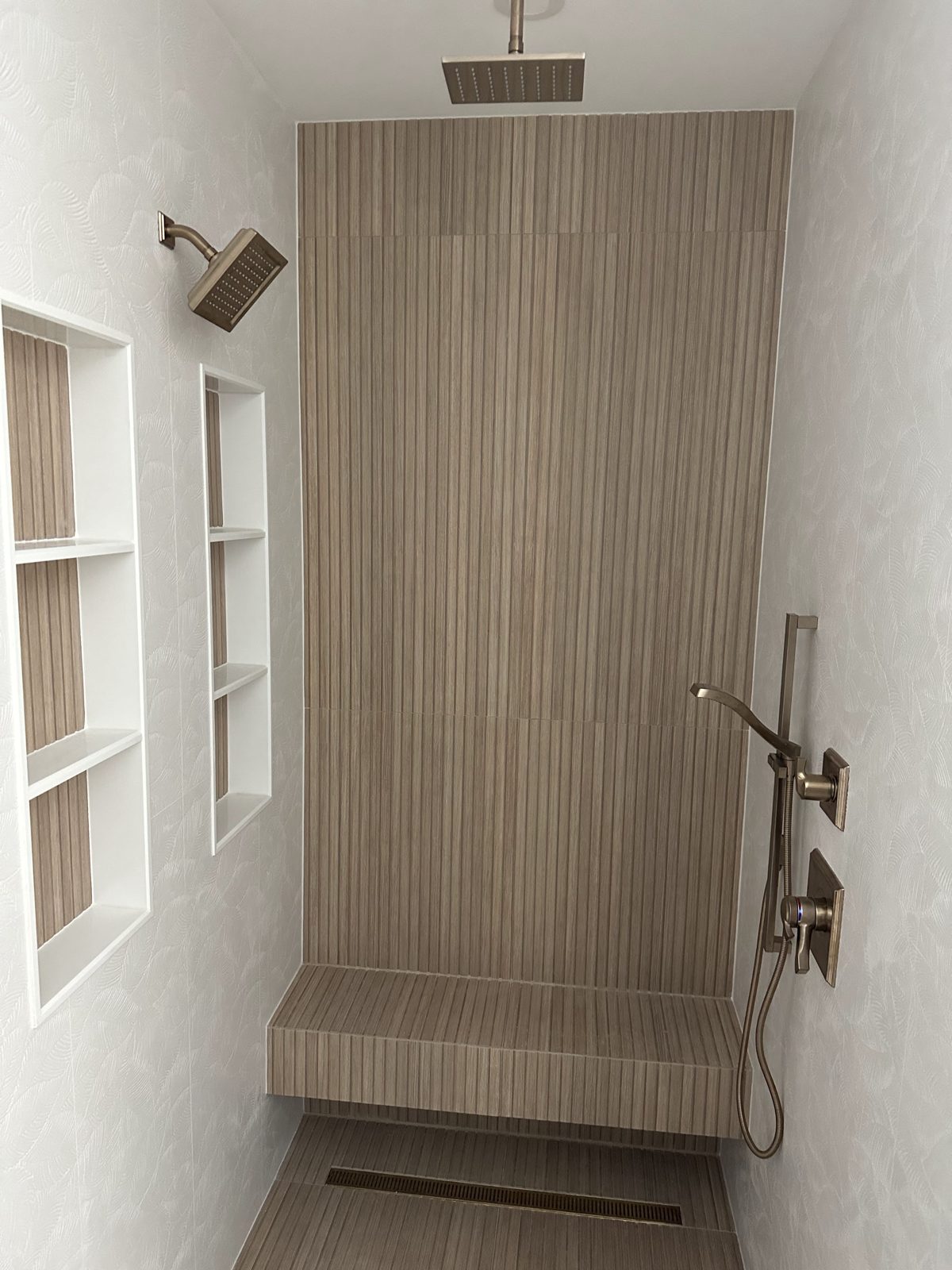
Cement board is not enough on its own. It holds up when it gets wet, but water can still pass through it. A waterproof membrane behind the tile is what keeps water out of the wall. Urban Remodeling puts a waterproof membrane behind the tile, not just cement board.
If you are planning a bathroom remodel in Vero Beach, Sebastian or Port St. Lucie, this one choice is worth understanding before you approve any plan. It sits behind the tile where you cannot see it, so it is easy to overlook.
What is behind the tile in a shower?
A shower wall is built in layers. Starting from the room and working in, you have tile, thin-set that bonds it, a waterproofing layer, a backer board and then the wall framing.
Each layer has a job. The tile and grout are what you see. The backer board gives the tile a flat, stable surface. The waterproofing layer is the part that stops moisture from reaching the framing. When any layer is missing or poorly done, the shower may look fine for a while and fail later.
Is cement board waterproof?
No. Cement board will not rot or swell the way drywall does, but it is not a waterproof barrier. Water and vapor can move through it.
Grout is not waterproof either. It is porous, and thin cracks can open over time. Every shower sends water through the grout lines in small amounts. If cement board is the only thing behind the tile, that water reaches the board, then the framing and the insulation. You may not notice until a stain appears on the other side of the wall or the floor feels soft.
What does a waterproof membrane do?
A membrane creates a continuous barrier so water running down the wall stays on the surface and drains away. It is the layer designed to stop moisture, instead of just tolerating it.
Urban Remodeling uses a waterproof membrane that is attached directly to the surface behind the tile, with no loose gaps for water to travel through. The membrane is also carried across corners, seams and the shower floor, because water finds the weak spots first.
A membrane does not replace good tile work. It works with it. Tile sheds most of the water, and the membrane handles what gets through. For a look at how tile jobs go wrong, see our post on DIY versus pro tile shower installation.
It also helps to know what the membrane is not. It is not a coating you can skip if the tile is good, and it is not something you can add later without removing the tile. Once the wall is closed, the only way to fix a missing barrier is to tear the shower out. That is the strongest reason to settle it before work begins.
Why does Florida humidity raise the stakes?
Florida air is warm and wet for much of the year, so a bathroom wall rarely gets a chance to dry out fully. Moisture that gets behind the tile stays there.
In a humid climate, small leaks do more harm. Damp framing can grow mold and start to decay, and the damage hides inside the wall. That is why a barrier that stops water at the source matters more here than in a dry region. Good ventilation helps too, but it cannot fix a wall that has no barrier.
Homes near the coast, from Fort Pierce to Melbourne, deal with this all year. A shower that is used daily gets wet daily. Planning for that from the start costs less trouble than repairing a wall later.
What should the written scope say about waterproofing?
The scope should name the waterproofing layer, say where it goes and say who installs it. A line like "waterproof membrane behind the tile, walls and shower floor" is far better than a vague mention of prep work.
Urban Remodeling gives you one written scope and price before work starts. That gives you a place to check the details. Look for these items:
- The type of backer board used on the walls.
- The waterproof membrane, named as its own item.
- Coverage of corners, seams and the shower floor.
- How the shower floor is sloped to the drain.
- The tile and grout you chose.
If your contractor lists only cement board, ask what stops water from passing behind it. A clear answer tells you a lot about how the job will be done.
How can you compare two shower bids fairly?
Put the scopes next to each other and compare what is behind the tile, not only the tile itself. Two bids can show the same tile and still describe very different showers.
If one bid names a membrane and the other does not, the second one may be leaving it out, or may be assuming cement board will do the job. Ask about it. You want to know exactly what you are paying for before any wall is opened.
Planning a shower or bathroom update? Call Urban Remodeling at (772) 404-8397 for a free estimate, and we will walk you through what goes behind the tile.
Thinking about this project?
Get a free bathroom estimate. We’ll walk the space with you and put a written price in front of you.
Call (772) 404-8397 Request a Free Estimate